
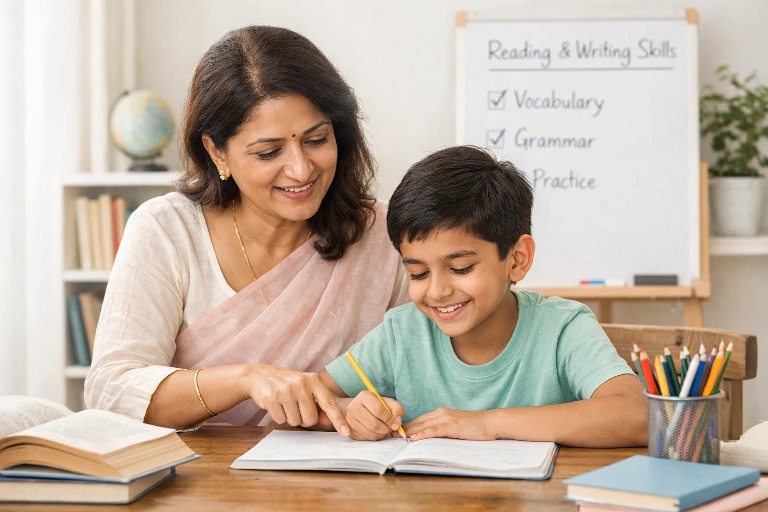
Strong reading and writing skills are the foundation of a child’s academic success. From understanding textbooks to expressing ideas clearly, these skills play a crucial role in every subject. For students from Class 1 to Class 6, developing good reading and writing habits early can make learning easier and more enjoyable in the years ahead.
This article explains simple and effective ways to improve reading and writing skills in young learners.
Why Reading and Writing Skills Are Important in Primary Classes
Reading helps children understand language, improve vocabulary, and develop thinking skills. Writing allows them to express thoughts, answer questions clearly, and perform better in exams. When students struggle with reading or writing, they often find other subjects difficult as well, including Maths and Science.
Building these skills early helps children gain confidence and become independent learners.
Encourage Daily Reading Habits
One of the best ways to improve reading skills is to make reading a daily habit. Children should read age-appropriate books, storybooks, short paragraphs, or even school lessons aloud for a few minutes every day.
Parents can support this by:
-
Choosing simple and interesting books
-
Asking the child to read slowly and clearly
-
Discussing the story or lesson after reading
Regular reading improves pronunciation, understanding, and fluency over time.
Focus on Understanding, Not Speed
Many children try to read fast without understanding what they read. It is important to encourage slow and meaningful reading. After reading a paragraph, ask simple questions like what happened, who was involved, or what the main idea was.
This helps children improve comprehension, which is essential for both reading and writing.
Improve Writing Through Regular Practice
Writing skills develop with consistent practice. Children should be encouraged to write small paragraphs, answers, or short stories based on their class level.
Simple ways to improve writing include:
-
Writing a few lines daily on any topic
-
Practicing sentence formation
-
Learning correct spelling and punctuation
-
Rewriting answers neatly
Good handwriting and correct sentence structure improve clarity and confidence.
Build Vocabulary Step by Step
A strong vocabulary makes reading easier and writing more effective. Children should learn a few new words every week and try to use them in sentences.
Reading books, listening to stories, and speaking in English regularly helps children naturally build vocabulary.
Create a Supportive Learning Environment
Children learn better when they feel encouraged. Mistakes should be corrected gently, and progress should be appreciated. Regular guidance from parents and teachers helps children stay motivated and interested in learning.
Personal attention, especially through one-to-one support, makes a big difference in improving reading and writing skills.
Role of Online Tuition in Improving Language Skills
Online tuition classes provide structured guidance and individual attention, which is very helpful for primary students. A teacher can focus on reading practice, writing improvement, grammar, and vocabulary based on the child’s level and learning pace.
With regular practice and proper guidance, children gradually become confident readers and writers.
Conclusion
Improving reading and writing skills takes time, patience, and regular practice. With daily reading, consistent writing exercises, and proper guidance, students from Class 1 to Class 6 can develop strong language skills that support their overall academic growth.
By Nidhi Mehta – India Tutor Online
Class 1 to 6 All Subjects
Call/Whatsapp: +91 9811521621