
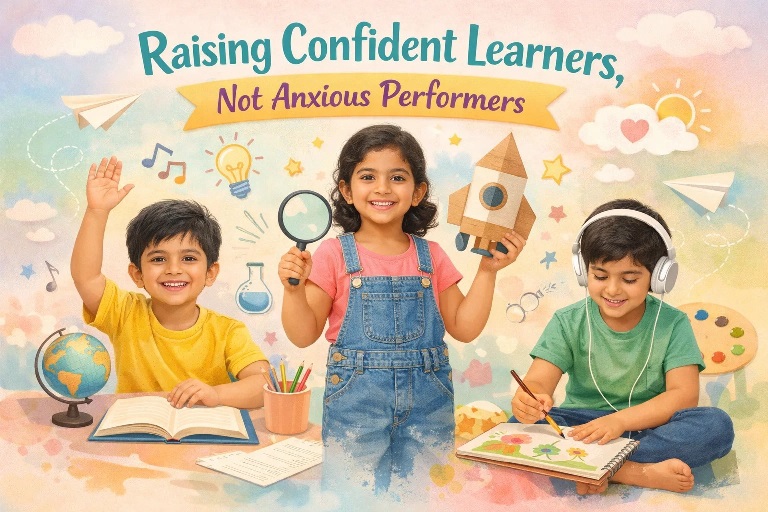
Raising Confident Learners, Not Anxious Performers

Raising Confident Learners, Not Anxious Performers

In today’s competitive academic environment, parents often focus heavily on grades and performance. While academic success is important, an excessive emphasis on marks can sometimes turn children into anxious performers rather than confident learners. Building confidence in primary school students is crucial, as it lays the foundation for lifelong learning and personal growth. In this article, we will explore how parents and educators can nurture confident learners, while also considering the approaches of different school curriculums, including CBSE, ICSE, and the International Baccalaureate (IB).

Understanding the Difference: Learners vs Performers

A confident learner is a child who enjoys the process of learning, asks questions freely, and is willing to make mistakes to understand concepts better. They are curious, resilient, and capable of thinking independently. On the other hand, an anxious performer is often motivated primarily by fear of failure or the pressure to achieve high grades. Such children may memorize information without understanding it, avoid challenges, and struggle with self-esteem when results do not meet expectations.

As parents, it is important to recognize these differences early and adjust guidance accordingly. Encouraging exploration, praising effort instead of just outcomes, and allowing children to fail and try again are key strategies for nurturing confidence.

Encouraging Concept-Based Learning

One of the most effective ways to raise confident learners is to focus on concept-based learning rather than rote memorization. Children should be guided to understand the “why” behind each concept. This approach not only helps in retaining knowledge for a longer time but also enables students to apply concepts in new situations, fostering creativity and problem-solving skills.

For example, in mathematics, instead of teaching formulas by rote, a tutor can demonstrate how the formula works through real-life examples. Similarly, in science, experiments and observations help children understand principles in a practical and engaging manner. When students comprehend concepts fully, they feel more confident in their abilities.

Balancing Curriculum Demands and Individual Learning

Different curriculums have different focuses. CBSE (Central Board of Secondary Education) emphasizes a balance between theory and application, ICSE (Indian Certificate of Secondary Education) focuses on detailed study and strong language skills, while IB (International Baccalaureate) encourages inquiry-based learning, critical thinking, and global awareness.

While CBSE and ICSE students may sometimes experience pressure due to exams and grades, IB students often face challenges in managing multiple projects and assignments. Regardless of the curriculum, the goal should always be to promote understanding over mere performance. Parents and tutors can help by creating a supportive environment where questions are welcomed, and learning is viewed as an enjoyable journey.

Role of Online Tuition in Building Confidence

Personalized online tuition can play a significant role in transforming anxious performers into confident learners. One-to-one sessions allow tutors to focus on the individual needs of a child, identify areas of difficulty, and adapt teaching methods accordingly. Children receive immediate feedback, guidance, and encouragement, which helps reduce anxiety and improve self-confidence.

A tutor experienced in multiple curriculums, including international boards, can guide students through challenging topics while maintaining a positive and motivating approach. Online classes also offer the flexibility to learn at a comfortable pace, making children feel secure and supported.

Practical Tips for Parents

Parents can complement academic support by encouraging a growth mindset at home. Praise efforts, curiosity, and problem-solving rather than just marks. Avoid comparing children with peers and celebrate small achievements. Provide opportunities for children to explore hobbies and creative activities outside academics. This holistic approach reduces anxiety and helps children develop confidence in multiple areas of life.

Conclusion

Raising confident learners requires a shift from a purely results-oriented approach to one that values understanding, curiosity, and personal growth. By focusing on concept clarity, encouraging questions, balancing curriculum demands, and providing personalized support through online tuition, parents can help their children become resilient, motivated, and confident learners.

By Nidhi Mehta – India Tutor Online

Class 1 to 6 All Subjects

Call/Whatsapp: +91 9811521621

Managing Screen Time During Online Classes

Managing Screen Time During Online Classes

Online classes have become an important part of education for primary school students. While online learning offers flexibility and access to quality teaching, many parents worry about the amount of screen time their child is exposed to. Managing screen time correctly is essential to protect a child’s health, focus, and overall development, especially for students from Class 1 to Class 6.

This article shares simple and practical ways to manage screen time during online classes without affecting learning quality.

Why Screen Time Management Is Important for Young Children

Children in primary classes are still developing physically and mentally. Excessive screen time can lead to eye strain, poor posture, reduced concentration, and tiredness. When screen time is planned and balanced properly, online classes can remain effective without harming a child’s well-being.

The goal is not to eliminate screen use but to use it wisely and purposefully.

Set a Fixed Routine for Online Classes

A clear daily routine helps children stay disciplined and focused. Online classes should be scheduled at fixed times, preferably when the child is fresh and attentive. Avoid keeping screens on outside of class time unless necessary for homework or revision.

When children know exactly when screen time starts and ends, they are less likely to overuse devices.

Encourage Breaks Between Online Sessions

Short breaks are extremely important for young learners. After every online class, children should step away from the screen for a few minutes. During breaks, encourage activities like stretching, walking, or simply resting their eyes.

These breaks help reduce eye strain and improve concentration during the next learning session.

Create a Proper Study Setup

A good study environment makes a big difference. Ensure the child sits at a proper desk or table instead of using mobile phones or tablets in bed. The screen should be at eye level, and the room should be well-lit.

This not only reduces physical strain but also helps the child take online classes more seriously.

Balance Screen Time with Offline Learning

Online classes should always be supported with offline activities. Encourage children to practice writing in notebooks, read physical books, and revise lessons away from screens. This strengthens understanding and reduces total screen exposure.

Offline learning also improves memory and helps children stay engaged without depending fully on devices.

Monitor Non-Academic Screen Usage

Parents should keep an eye on how much time children spend on screens outside online classes. Games, videos, and mobile apps can quickly increase daily screen time. Setting clear rules for entertainment screen use helps maintain balance.

Children should understand that screens are mainly for learning during class hours.

Communicate with the Tutor When Needed

If a child feels tired or loses focus during online classes, parents should openly discuss it with the tutor. A good tutor can adjust teaching methods, pacing, or class timing to suit the child’s needs.

Healthy communication ensures that learning remains effective without unnecessary screen pressure.

Conclusion

Managing screen time during online classes is about balance, not restriction. With proper routines, regular breaks, offline practice, and parental involvement, online learning can be safe and highly effective for Class 1 to Class 6 students.

When screen time is used thoughtfully, children can benefit from online education while maintaining their physical and mental well-being.

By Nidhi Mehta
India Tutor Online Class 1 to 6 All Subjects
Call/Whatsapp: +91 9811521621
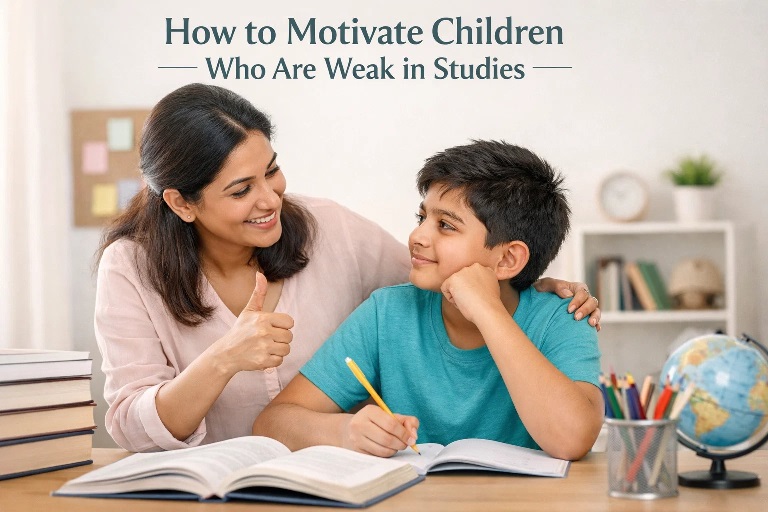
How to Motivate Children Who Are Weak in Studies

How to Motivate Children Who Are Weak in Studies

Many parents worry when their child struggles with studies, especially in the early school years. For students from Class 1 to Class 6, academic weakness does not mean lack of intelligence. Most of the time, children need the right guidance, patience, and encouragement to regain confidence and improve their performance.

Understanding how to motivate such children can make a big difference in their learning journey.

Understand the Root Cause First

Before trying to push a child to study more, it is important to understand why the child is struggling. Some children find certain subjects difficult, while others may feel scared of making mistakes. In many cases, weak fundamentals, fear of failure, or lack of personal attention can reduce a child’s interest in studies.

Once parents and teachers identify the real reason, it becomes easier to support the child in the right way.

Focus on Effort, Not Just Marks

Children who are weak in studies often feel discouraged because of low marks. Constant comparison with other students can further lower their confidence. Instead of focusing only on results, parents should appreciate the child’s effort.

Even small improvements deserve praise. When children feel appreciated, they become more willing to try and learn.

Break Learning into Small Steps

Large lessons and long homework sessions can overwhelm young learners. For primary school students, learning should be broken into small and manageable steps. Simple explanations, short study sessions, and regular revision help children understand concepts better.

When children feel that learning is achievable, their motivation naturally increases.

Create a Positive Study Environment

A calm and comfortable study environment plays an important role in motivating children. A quiet space with proper lighting, limited distractions, and a fixed study routine helps children focus better.

Parents should avoid shouting or showing frustration during study time. A peaceful environment makes children feel safe and more open to learning.

Encourage Questions and Curiosity

Many children hesitate to ask questions because they fear being judged. Encouraging children to ask doubts freely helps them overcome this fear. When children understand that making mistakes is a part of learning, they become more confident.

Curiosity-driven learning builds interest and makes studies less stressful.

Provide Personal Attention and Guidance

Children who are weak in studies often need extra personal attention. One-to-one guidance helps identify problem areas and allows lessons to be paced according to the child’s understanding.

Personalized support helps children build strong basics, especially in subjects like Maths and English, which are essential for higher classes.

Be Patient and Consistent

Improvement does not happen overnight. Parents need to be patient and consistent with their efforts. Regular support, positive reinforcement, and realistic expectations help children grow academically and emotionally.

Motivation grows when children feel supported, not pressured.

Conclusion

Motivating a child who is weak in studies requires understanding, patience, and the right learning approach. With encouragement, personal attention, and a supportive environment, children from Class 1 to Class 6 can overcome academic challenges and develop confidence in their abilities.

Early guidance can help build a strong foundation for future learning success.

By Nidhi Mehta
India Tutor Online Class 1 to 6 All Subjects
Call/Whatsapp: +91 9811521621

Online Tuition vs Home Tuition for Primary School Students

Online Tuition vs Home Tuition for Primary School Students

Choosing the right type of tuition for your child can be challenging, especially in the early school years. Parents often wonder whether online tuition or home tuition is more effective for students from Class 1 to Class 6. Both options have their benefits, but understanding their differences can help you make the best decision for your child’s academic growth.

Convenience and Flexibility

One of the biggest advantages of online tuition is convenience. Students can attend classes from the comfort of their home without the need to travel. This is especially helpful for parents with busy schedules or children studying in different cities or countries. Online tuition offers flexible timings, making it easier to fit classes into a child’s daily routine.

Home tuition, on the other hand, involves a tutor coming to your home. While this allows for personal interaction, it may require more planning and coordination for both parents and children. Travel time and scheduling can sometimes make it less flexible compared to online tuition.

Personalized Attention and Focus

Both online and home tuition provide one-to-one attention, which is crucial for primary school students. In online tuition, the tutor can focus entirely on the child, using interactive tools such as digital whiteboards, slides, and online exercises to make learning engaging. Many students enjoy the interactive nature of online classes, which can improve understanding and retention of concepts.

Home tuition also allows for focused learning, with the tutor present in the same room as the child. This can be beneficial for students who prefer face-to-face interaction and need guidance in a physical learning environment. However, the effectiveness depends on the tutor’s ability to maintain engagement during the session.

Safety and Health Considerations

Online tuition offers a safer alternative, especially for children attending international or distant schools. There is no need to travel, reducing exposure to traffic and other risks. During times when health and safety are a concern, such as seasonal illnesses or pandemics, online tuition ensures continuous learning without interruptions.

Home tuition involves physical interaction, which may not always be convenient for parents concerned about safety. While many parents trust home tutors, online tuition can provide peace of mind, especially for younger children.

Access to Qualified Tutors

With online tuition, children can access experienced and qualified tutors from anywhere in the world. This is particularly valuable if your child is following an international curriculum or needs a tutor with specific expertise. Online platforms make it easier to find tutors like Nidhi Mehta, who have experience teaching students from different countries and school systems.

Home tuition may have a more limited selection depending on your location. Finding a highly qualified tutor locally can sometimes be challenging, and the choices may be restricted to those available within your area.

Conclusion

Both online tuition and home tuition have their own advantages for primary school students. Online tuition provides flexibility, safety, and access to a wider range of qualified tutors, while home tuition offers in-person interaction and immediate guidance. For parents seeking a reliable and experienced tutor who can teach all subjects for Class 1 to Class 6 with personalized attention, online tuition often proves to be a convenient and effective solution.

By Nidhi Mehta – India Tutor Online

Class 1 to 6 All Subjects

Call/Whatsapp: +91 9811521621

Benefits of One-to-One Online Tuition for Primary Classes

Benefits of One-to-One Online Tuition for Primary Classes

Primary school years play a very important role in a child’s academic journey. Classes 1 to 6 are the stage where children develop basic reading, writing, mathematical, and thinking skills. During these early years, the right guidance can make a big difference. One-to-one online tuition has emerged as a highly effective learning option for primary students, especially when parents want focused attention and steady improvement.

Individual Attention for Better Understanding

In one-to-one online tuition, the entire class is dedicated to a single student. This means the teacher focuses only on the child’s learning needs, strengths, and weaknesses. Unlike group classes, there is no competition for attention. Concepts are explained at a pace that suits the child, helping them understand lessons clearly instead of memorizing answers. This is especially useful for students who hesitate to ask questions in a group setting.

Personalized Learning Approach

Every child learns differently. Some children understand quickly, while others need more time and repetition. One-to-one online tuition allows lessons to be personalized based on the child’s learning style and school curriculum. The teacher can revise difficult topics, provide extra practice, and adjust teaching methods to ensure better results. This personalized approach helps children build a strong foundation in subjects like Maths, English, Science, and EVS.

Strong Focus on Basics and Concept Clarity

For primary classes, understanding basic concepts is more important than completing the syllabus quickly. One-to-one online tuition helps strengthen fundamentals by focusing on concept clarity. When a child understands the basics well, they perform better in higher classes. Regular revision and guided practice ensure that learning gaps are identified early and corrected in time.

Improved Confidence and Communication Skills

Many primary students lack confidence when they struggle academically. One-to-one online tuition creates a comfortable learning environment where children feel safe to ask questions and express doubts. Over time, this improves their confidence, communication skills, and interest in studies. Children become more independent and start participating actively in their learning process.

Flexible and Comfortable Learning Environment

Online tuition allows children to learn from the comfort of their home, reducing travel time and fatigue. This helps them stay relaxed and focused during classes. One-to-one online tuition also offers flexible scheduling, making it easier for parents to manage school, homework, and extracurricular activities without stress.

Better Monitoring of Progress

In one-to-one online tuition, the teacher can closely monitor the child’s academic progress. Regular feedback helps parents understand how their child is performing and where improvement is needed. This ongoing assessment ensures steady academic growth and timely support.

Ideal Support for Busy Parents and International Students

One-to-one online tuition is especially helpful for working parents and families living abroad. It ensures consistent academic support without compromising on quality. Children receive dedicated attention regardless of location or time zone.

Conclusion

One-to-one online tuition is a valuable learning solution for primary classes. It supports concept clarity, builds confidence, and provides personalized guidance that helps children grow academically. For Classes 1 to 6, this focused approach lays a strong foundation for future success.

By Nidhi Mehta – India Tutor Online

Class 1 to 6 All Subjects

Call/Whatsapp: +91 9811521621
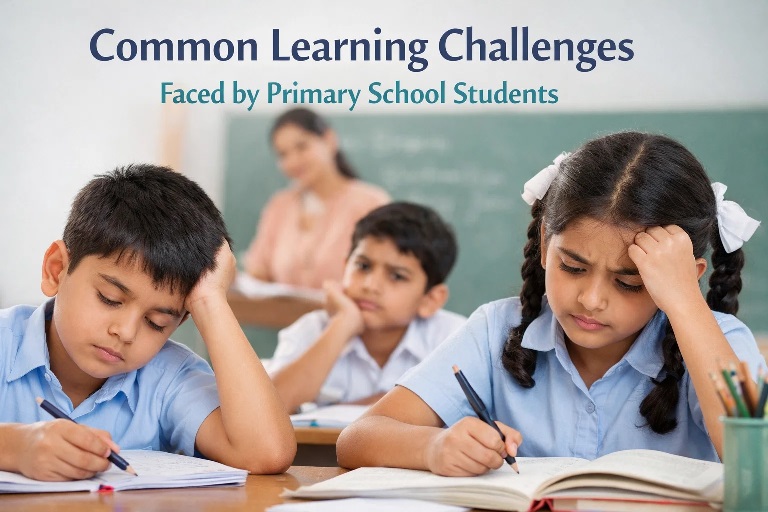
Common Learning Challenges Faced by Primary School Students

Common Challenges Faced by Learning Primary School Students

Primary school years play a crucial role in shaping a child’s learning habits and academic foundation. Classes 1 to 6 are the stages where children learn basic concepts in subjects like Mathematics, English, Science, and EVS. When a child struggles during these years, timely academic support can make a significant difference. Many parents wait too long, assuming the child will improve with time. Recognizing early signs can help prevent long-term learning gaps.

Difficulty Understanding Basic Concepts

One of the most common signs is when a child finds it hard to understand basic concepts even after repeated explanations. This may include difficulty with simple maths operations, reading comprehension, or understanding instructions. If your child often says “I don’t understand” or avoids certain subjects, it may indicate the need for extra academic support.

Lack of Interest in Studies

If your child frequently avoids homework, delays study time, or shows no interest in schoolwork, it could be more than just distraction. Often, children lose interest when they feel overwhelmed or unable to cope with lessons taught in class. Extra guidance can help rebuild confidence and make learning enjoyable again.

Poor Academic Performance Despite Effort

Some children put in effort but still struggle to perform well in tests and exams. Low marks, incomplete answers, or frequent mistakes can indicate gaps in understanding. When effort does not match results, personalized academic support can help identify and address weak areas.

Trouble Completing Homework Independently

Primary students are expected to gradually develop independent study habits. If your child constantly needs help with homework or cannot complete assignments without supervision, it may be a sign that concepts are not clear. Extra academic support can help children become more confident and self-reliant learners.

Difficulty with Reading and Writing Skills

Reading and writing are essential skills in primary education. Slow reading, poor spelling, unclear handwriting, or difficulty forming sentences can affect overall academic performance. Early support in language skills can prevent future learning difficulties across all subjects.

Lack of Confidence in the Classroom

Children who avoid answering questions, hesitate to participate, or feel anxious about tests may be struggling academically. Low confidence often develops when a child feels they are not keeping up with classmates. With the right academic support, children can regain confidence and actively engage in learning.

Frequent Complaints About School

If your child regularly complains about school, teachers, or specific subjects, it may be their way of expressing academic stress. Such behavior should not be ignored, as it often signals underlying learning challenges.

How Extra Academic Support Helps

Extra academic support provides personalized attention, helps strengthen basic concepts, and allows children to learn at their own pace. It encourages consistent practice, clears doubts, and builds strong learning habits. Early intervention in primary classes helps children stay confident and prepared for higher classes.

Recognizing these signs early and taking action can help your child enjoy learning and achieve steady academic growth.

By Nidhi Mehta – India Tutor Online
Class 1 to 6 All Subjects
Call/WhatsApp: +91 9811521621

How Online Tuition Helps Young Students Build Strong Fundamentals

How Online Tuition Helps Class 1 to 6 Students Build Strong Fundamentals

Strong academic fundamentals play a crucial role in a child’s long-term learning journey. For students in Class 1 to Class 6, these early years shape how well they understand concepts, develop study habits, and gain confidence in school. Online tuition has emerged as an effective and reliable way to support young learners during this important stage of education.

Individual Attention Leads to Better Understanding

One of the biggest advantages of online tuition is personalized attention. In traditional classrooms, teachers often have limited time for each student. Online tuition allows lessons to be tailored to a child’s pace and learning style. When a student does not understand a concept, it can be explained again patiently until it becomes clear. This helps prevent gaps in learning and builds a strong foundation from the beginning.

Clear Focus on Concept-Based Learning

For primary classes, understanding concepts is more important than memorizing answers. Online tuition focuses on explaining topics step by step, ensuring that students know the “why” and “how” behind what they are learning. Whether it is basic maths, grammar rules, or science concepts, concept clarity helps students perform better as subjects become more complex in higher classes.

Comfortable Learning Environment at Home

Young students learn best when they feel relaxed and confident. Online tuition allows children to study from the comfort of their home, where they feel safe and supported. This reduces stress and distractions, making it easier for them to focus on lessons. Parents also feel reassured knowing their child is learning in a familiar environment.

Strong Support for Reading, Writing, and Communication

Classes 1 to 6 are crucial for developing language skills. Online tuition helps students improve reading, writing, grammar, and communication through regular practice and guided learning. Strong language skills support all subjects and boost overall academic performance. Early improvement in English also builds confidence and helps students express their thoughts clearly.

Regular Practice and Revision

Consistent practice is essential for building strong fundamentals. Online tuition provides structured lessons with regular revision, practice questions, and doubt-solving sessions. This helps students remember what they learn and apply concepts correctly in school exams and daily classwork.

Encourages Confidence and Independent Learning

When children understand their subjects well, they naturally become more confident. Online tuition encourages students to ask questions, share doubts, and participate actively in learning. Over time, this helps them become independent learners who are not afraid of challenging topics.

Helps Parents Stay Involved in Learning

Online tuition also makes it easier for parents to stay informed about their child’s progress. Parents can communicate directly with the tutor, understand areas of improvement, and support learning at home. This teamwork between tutor, student, and parent creates a positive learning environment.

A Strong Start for Long-Term Academic Success

Building strong fundamentals in primary classes sets the stage for future academic success. Online tuition provides the right balance of personal attention, structured learning, and flexibility, helping young students develop skills that stay with them throughout their education.

By Nidhi Mehta – India Tutor Online
Class 1 to 6 All Subjects
Call/WhatsApp: +91 9811521621

error: Content is protected !!