

How to Communicate Effectively with Teachers and Tutors

How to Communicate Effectively with Teachers and Tutors

Good communication between parents and teachers plays a very important role in a child’s academic success, especially for students from Class 1 to Class 6. At this stage, children are still developing learning habits, confidence, and understanding of subjects. When parents and teachers communicate well, it creates a strong support system for the child.

This article explains simple and effective ways parents can communicate better with teachers and tutors to help their child learn and grow.

Understand the Role of the Teacher or Tutor

Teachers and tutors work closely with children and understand their learning strengths and weaknesses. Parents should see them as partners rather than problem-solvers only during exams or difficulties. Regular and respectful communication helps build trust and ensures that everyone is working towards the same goal: the child’s progress.

Communicate Regularly, Not Only When There Is a Problem

Many parents contact teachers only when marks fall or issues arise. It is better to communicate regularly, even when things are going well. Short check-ins help parents understand how the child is performing, what topics are being covered, and whether any additional support is needed.

Regular communication prevents small issues from becoming bigger problems later.

Be Clear and Specific While Communicating

When speaking to a teacher or tutor, try to be clear about your concerns or questions. Instead of saying “My child is weak,” explain where the child is struggling, such as reading, writing, maths basics, or homework completion. Clear communication helps the teacher or tutor give better guidance and solutions.

Listen Actively to Feedback

Teachers and tutors may share feedback that parents do not always expect. It is important to listen calmly and openly. Feedback is not criticism; it is meant to help the child improve. Ask questions if something is unclear and request suggestions on how you can support learning at home.

Share Important Information About Your Child

Parents know their children best. Sharing useful information such as learning habits, attention span, fears, or recent changes at home can help teachers understand the child better. This allows them to adjust their teaching approach and support the child more effectively.

Maintain a Positive and Respectful Tone

Good communication is always respectful. Even if there is a concern, discussing it politely leads to better outcomes. A positive tone encourages cooperation and helps build a healthy parent-teacher relationship, which directly benefits the child.

Follow Up on Action Points

If a teacher or tutor suggests certain steps, such as extra practice, reading habits, or revision routines, make sure to follow up. Consistency between home and tuition classes helps children feel supported and motivated.

Encourage Your Child to Communicate Too

Children should also be encouraged to ask questions and express doubts to their teachers or tutors. When children feel comfortable communicating, they become more confident learners. Parents can support this by reassuring them that asking questions is a good habit.

Use the Right Communication Channels

Stick to the communication method suggested by the teacher or tutor, whether it is WhatsApp, calls, emails, or scheduled meetings. This keeps communication organized and effective.

Final Thoughts

Effective communication between parents and teachers or tutors creates a positive learning environment for children from Class 1 to Class 6. When everyone works together with clarity, respect, and consistency, children feel supported and perform better academically.

By Nidhi Mehta – India Tutor Online

Class 1 to 6 – All Subjects

Call/Whatsapp: +91 9811521621

Importance of Concept Clarity in Primary Education

Importance of Concept Clarity in Primary Education

Primary education forms the foundation of a child’s academic journey. The years from Class 1 to Class 6 are crucial for developing strong learning habits, understanding basic concepts, and building confidence in all subjects. One of the most important aspects of primary education is concept clarity, which ensures that children understand what they are learning instead of just memorizing facts.

What is Concept Clarity?

Concept clarity means that a child fully understands a topic, principle, or idea. For example, in mathematics, it is not enough for a student to memorize addition or subtraction tables. They should understand why the methods work, how numbers relate to each other, and how to apply the concepts in different situations. Similarly, in science, children should grasp the basic principles behind experiments and observations, rather than only remembering answers from textbooks.

Why Concept Clarity is Important

Concept clarity helps children develop critical thinking skills. When students understand the ‘why’ and ‘how’ behind each topic, they can solve problems independently, apply knowledge in practical situations, and learn new concepts more easily. On the other hand, rote learning can lead to confusion, poor retention, and difficulty in higher classes.

For subjects like mathematics and science, concept clarity builds a strong foundation for advanced learning. Students who understand basic concepts early on are more confident in tackling complex problems in later classes. Similarly, in English and other languages, understanding grammar rules and sentence formation helps children communicate effectively and write with confidence.

Benefits of Concept Clarity

  1. Better Academic Performance: Children with a clear understanding of concepts can solve questions correctly and quickly.

  2. Improved Confidence: Concept clarity reduces fear of difficult topics and boosts self-confidence.

  3. Long-Term Retention: Understanding concepts helps children remember information for longer periods.

  4. Problem-Solving Skills: Students can approach new problems logically, using what they already know.

  5. Active Participation: Children who understand their lessons engage more actively in class and online sessions.

How Parents and Tutors Can Help

Parents can encourage concept clarity by asking questions, discussing real-life examples, and helping children apply what they learn in daily life. Tutors play a crucial role by explaining topics patiently, breaking concepts into simple steps, and checking understanding through practice and repetition.

Online tuition, when conducted one-to-one, is especially effective for developing concept clarity. Each child receives personalized attention, allowing the tutor to focus on weak areas and ensure that the student fully understands each topic before moving ahead.

Conclusion

Developing concept clarity in Class 1 to 6 students is essential for academic success and overall learning growth. It forms the foundation for confidence, problem-solving skills, and effective communication. Children who learn with a clear understanding of concepts are better prepared for higher classes and enjoy learning without fear or confusion.

By focusing on concept clarity from an early stage, parents and tutors can ensure that children not only perform well in exams but also develop a lifelong love for learning.

By Nidhi Mehta – India Tutor Online

Class 1 to 6 All Subjects

Call/Whatsapp: +91 9811521621
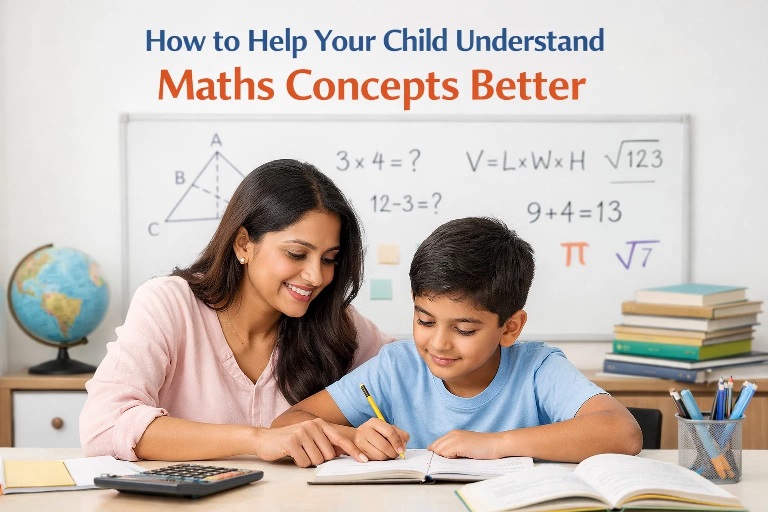
How to Help Your Child Understand Maths Concepts Better

How to Help Your Child Understand Maths Concepts Better

Mathematics is a subject that often challenges young learners. For students from Class 1 to Class 6, building a strong foundation in maths is essential for their confidence and academic success. As a parent, you play an important role in helping your child develop a clear understanding of maths concepts. Here are some practical strategies that can make learning maths easier and more enjoyable for your child.

Start with Concept Clarity

Before solving problems, your child needs to understand the basic concepts. For example, if they are learning addition or subtraction, make sure they know what these operations mean in real life. Use simple examples like sharing apples or counting toys to explain how numbers work. When children understand the concept behind a problem, they can solve it with confidence.

Use Visual Aids and Real-Life Examples

Many children grasp maths better when they can see it visually. Use objects like coins, blocks, or beads to demonstrate addition, subtraction, multiplication, or division. Visual aids make abstract concepts more concrete. You can also relate maths to everyday situations, such as calculating the total cost of items while shopping or measuring ingredients while cooking. This approach helps children see the practical use of maths.

Break Problems into Smaller Steps

Complex problems can overwhelm young learners. Teach your child to break a problem into smaller, manageable steps. For example, while solving a word problem, they can first identify what is given, then what is required, and finally, solve it step by step. Breaking problems into smaller parts makes maths less intimidating and encourages logical thinking.

Encourage Practice with a Purpose

Practice is important, but it should be meaningful. Encourage your child to solve a variety of problems to strengthen their understanding. Regular practice helps them recognize patterns, improve speed, and develop accuracy. Focus on quality rather than quantity and provide guidance whenever they face difficulties. Praise their efforts to boost motivation and confidence.

Make Learning Interactive and Fun

Maths does not have to be boring. Incorporate games, quizzes, and puzzles into learning. Simple activities like number games, flashcards, or online maths apps can make learning engaging. When children enjoy the process, they are more likely to remember concepts and develop a positive attitude toward the subject.

Provide Timely Support and Encouragement

Children sometimes hesitate to ask questions when they feel stuck. Encourage them to ask doubts and provide clear explanations. Be patient and positive, reinforcing the idea that making mistakes is a natural part of learning. Regular encouragement builds confidence and reduces maths anxiety.

Seek Professional Guidance if Needed

If your child struggles with certain concepts despite practice and support, consider enrolling them in online tuition classes. A qualified tutor can provide personalized guidance, identify gaps in understanding, and offer structured lessons tailored to the child’s needs. Individual attention can significantly improve their learning outcomes.

By following these strategies, you can help your child develop a solid understanding of maths concepts and foster a lifelong interest in learning. Strong foundational skills in mathematics not only improve academic performance but also build problem-solving and logical thinking abilities that benefit children in all areas of life.

By Nidhi Mehta – India Tutor Online

Class 1 to 6 All Subjects

Call/Whatsapp: +91 9811521621

Online Tuition vs Home Tuition for Primary School Students

Online Tuition vs Home Tuition for Primary School Students

Choosing the right type of tuition for your child can be challenging, especially in the early school years. Parents often wonder whether online tuition or home tuition is more effective for students from Class 1 to Class 6. Both options have their benefits, but understanding their differences can help you make the best decision for your child’s academic growth.

Convenience and Flexibility

One of the biggest advantages of online tuition is convenience. Students can attend classes from the comfort of their home without the need to travel. This is especially helpful for parents with busy schedules or children studying in different cities or countries. Online tuition offers flexible timings, making it easier to fit classes into a child’s daily routine.

Home tuition, on the other hand, involves a tutor coming to your home. While this allows for personal interaction, it may require more planning and coordination for both parents and children. Travel time and scheduling can sometimes make it less flexible compared to online tuition.

Personalized Attention and Focus

Both online and home tuition provide one-to-one attention, which is crucial for primary school students. In online tuition, the tutor can focus entirely on the child, using interactive tools such as digital whiteboards, slides, and online exercises to make learning engaging. Many students enjoy the interactive nature of online classes, which can improve understanding and retention of concepts.

Home tuition also allows for focused learning, with the tutor present in the same room as the child. This can be beneficial for students who prefer face-to-face interaction and need guidance in a physical learning environment. However, the effectiveness depends on the tutor’s ability to maintain engagement during the session.

Safety and Health Considerations

Online tuition offers a safer alternative, especially for children attending international or distant schools. There is no need to travel, reducing exposure to traffic and other risks. During times when health and safety are a concern, such as seasonal illnesses or pandemics, online tuition ensures continuous learning without interruptions.

Home tuition involves physical interaction, which may not always be convenient for parents concerned about safety. While many parents trust home tutors, online tuition can provide peace of mind, especially for younger children.

Access to Qualified Tutors

With online tuition, children can access experienced and qualified tutors from anywhere in the world. This is particularly valuable if your child is following an international curriculum or needs a tutor with specific expertise. Online platforms make it easier to find tutors like Nidhi Mehta, who have experience teaching students from different countries and school systems.

Home tuition may have a more limited selection depending on your location. Finding a highly qualified tutor locally can sometimes be challenging, and the choices may be restricted to those available within your area.

Conclusion

Both online tuition and home tuition have their own advantages for primary school students. Online tuition provides flexibility, safety, and access to a wider range of qualified tutors, while home tuition offers in-person interaction and immediate guidance. For parents seeking a reliable and experienced tutor who can teach all subjects for Class 1 to Class 6 with personalized attention, online tuition often proves to be a convenient and effective solution.

By Nidhi Mehta – India Tutor Online

Class 1 to 6 All Subjects

Call/Whatsapp: +91 9811521621

How Online Tuition Helps Young Students Build Strong Fundamentals

How Online Tuition Helps Class 1 to 6 Students Build Strong Fundamentals

Strong academic fundamentals play a crucial role in a child’s long-term learning journey. For students in Class 1 to Class 6, these early years shape how well they understand concepts, develop study habits, and gain confidence in school. Online tuition has emerged as an effective and reliable way to support young learners during this important stage of education.

Individual Attention Leads to Better Understanding

One of the biggest advantages of online tuition is personalized attention. In traditional classrooms, teachers often have limited time for each student. Online tuition allows lessons to be tailored to a child’s pace and learning style. When a student does not understand a concept, it can be explained again patiently until it becomes clear. This helps prevent gaps in learning and builds a strong foundation from the beginning.

Clear Focus on Concept-Based Learning

For primary classes, understanding concepts is more important than memorizing answers. Online tuition focuses on explaining topics step by step, ensuring that students know the “why” and “how” behind what they are learning. Whether it is basic maths, grammar rules, or science concepts, concept clarity helps students perform better as subjects become more complex in higher classes.

Comfortable Learning Environment at Home

Young students learn best when they feel relaxed and confident. Online tuition allows children to study from the comfort of their home, where they feel safe and supported. This reduces stress and distractions, making it easier for them to focus on lessons. Parents also feel reassured knowing their child is learning in a familiar environment.

Strong Support for Reading, Writing, and Communication

Classes 1 to 6 are crucial for developing language skills. Online tuition helps students improve reading, writing, grammar, and communication through regular practice and guided learning. Strong language skills support all subjects and boost overall academic performance. Early improvement in English also builds confidence and helps students express their thoughts clearly.

Regular Practice and Revision

Consistent practice is essential for building strong fundamentals. Online tuition provides structured lessons with regular revision, practice questions, and doubt-solving sessions. This helps students remember what they learn and apply concepts correctly in school exams and daily classwork.

Encourages Confidence and Independent Learning

When children understand their subjects well, they naturally become more confident. Online tuition encourages students to ask questions, share doubts, and participate actively in learning. Over time, this helps them become independent learners who are not afraid of challenging topics.

Helps Parents Stay Involved in Learning

Online tuition also makes it easier for parents to stay informed about their child’s progress. Parents can communicate directly with the tutor, understand areas of improvement, and support learning at home. This teamwork between tutor, student, and parent creates a positive learning environment.

A Strong Start for Long-Term Academic Success

Building strong fundamentals in primary classes sets the stage for future academic success. Online tuition provides the right balance of personal attention, structured learning, and flexibility, helping young students develop skills that stay with them throughout their education.

By Nidhi Mehta – India Tutor Online
Class 1 to 6 All Subjects
Call/WhatsApp: +91 9811521621

error: Content is protected !!