
Building Good Study Habits from an Early Age

Building good study habits from an early age plays a crucial role in a child’s academic success. For students from Class 1 to Class 6, this is the stage where learning patterns, discipline, and confidence begin to take shape. When children develop healthy study habits early, they find it easier to understand concepts, manage time, and perform well as academic demands increase.

Why Early Study Habits Matter

Primary school years are the foundation of a child’s learning journey. At this stage, children are curious, receptive, and open to guidance. Good study habits help them learn how to focus, follow routines, and approach studies with a positive mindset. Instead of studying only before exams, children who develop regular habits learn consistently and feel less pressure during assessments.

Strong study habits also build self-discipline. Children learn responsibility and independence, which prepares them not just for higher classes but also for life beyond school.

Creating a Simple and Consistent Routine

A fixed study routine helps children know when it is time to study and when it is time to relax. Parents should create a daily schedule that includes schoolwork, revision, playtime, and rest. For young students, short and focused study sessions work better than long hours.

Studying at the same time each day helps children build discipline naturally. A quiet and comfortable study space, free from distractions, further improves concentration and learning efficiency.

Encouraging Understanding Over Memorization

One of the most important study habits is focusing on understanding concepts instead of memorizing answers. Children should be encouraged to ask questions and clear doubts as soon as they arise. When students understand the “why” behind a concept, they remember it better and can apply it confidently.

Parents and teachers should explain topics in simple language and relate them to real-life examples. This makes learning more meaningful and enjoyable for young learners.

Developing Reading and Writing Habits

Regular reading improves vocabulary, comprehension, and overall language skills. Even simple storybooks or age-appropriate reading material can make a big difference. Writing practice, such as short paragraphs or answers in the child’s own words, helps strengthen understanding and expression.

These habits are especially important for English language development in primary classes.

Teaching Time Management and Responsibility

Children should be guided to complete homework on time and revise lessons regularly. Simple checklists or planners can help them learn how to organize tasks. This builds responsibility and reduces last-minute stress.

Parents should encourage effort rather than just results. Appreciation and positive feedback motivate children to stay consistent with their studies.

Role of Online Tuition in Building Study Habits

Personalized online tuition can play a strong role in shaping good study habits. One-to-one guidance helps identify learning gaps early and reinforces discipline through regular practice. With the right support, children gain confidence and develop a structured approach to learning.

Building good study habits from an early age sets children on a path of lifelong learning. With patience, consistency, and the right guidance, students from Class 1 to Class 6 can develop habits that support both academic success and personal growth.

By Nidhi Mehta – India Tutor Online Class 1 to 6 All Subjects – Call/WhatsApp: +91 9811521621

How to Improve Reading and Writing Skills

Strong reading and writing skills are the foundation of a child’s academic success. From understanding textbooks to expressing ideas clearly, these skills play a crucial role in every subject. For students from Class 1 to Class 6, developing good reading and writing habits early can make learning easier and more enjoyable in the years ahead.

This article explains simple and effective ways to improve reading and writing skills in young learners.

Why Reading and Writing Skills Are Important in Primary Classes

Reading helps children understand language, improve vocabulary, and develop thinking skills. Writing allows them to express thoughts, answer questions clearly, and perform better in exams. When students struggle with reading or writing, they often find other subjects difficult as well, including Maths and Science.

Building these skills early helps children gain confidence and become independent learners.

Encourage Daily Reading Habits

One of the best ways to improve reading skills is to make reading a daily habit. Children should read age-appropriate books, storybooks, short paragraphs, or even school lessons aloud for a few minutes every day.

Parents can support this by:

  • Choosing simple and interesting books

  • Asking the child to read slowly and clearly

  • Discussing the story or lesson after reading

Regular reading improves pronunciation, understanding, and fluency over time.

Focus on Understanding, Not Speed

Many children try to read fast without understanding what they read. It is important to encourage slow and meaningful reading. After reading a paragraph, ask simple questions like what happened, who was involved, or what the main idea was.

This helps children improve comprehension, which is essential for both reading and writing.

Improve Writing Through Regular Practice

Writing skills develop with consistent practice. Children should be encouraged to write small paragraphs, answers, or short stories based on their class level.

Simple ways to improve writing include:

  • Writing a few lines daily on any topic

  • Practicing sentence formation

  • Learning correct spelling and punctuation

  • Rewriting answers neatly

Good handwriting and correct sentence structure improve clarity and confidence.

Build Vocabulary Step by Step

A strong vocabulary makes reading easier and writing more effective. Children should learn a few new words every week and try to use them in sentences.

Reading books, listening to stories, and speaking in English regularly helps children naturally build vocabulary.

Create a Supportive Learning Environment

Children learn better when they feel encouraged. Mistakes should be corrected gently, and progress should be appreciated. Regular guidance from parents and teachers helps children stay motivated and interested in learning.

Personal attention, especially through one-to-one support, makes a big difference in improving reading and writing skills.

Role of Online Tuition in Improving Language Skills

Online tuition classes provide structured guidance and individual attention, which is very helpful for primary students. A teacher can focus on reading practice, writing improvement, grammar, and vocabulary based on the child’s level and learning pace.

With regular practice and proper guidance, children gradually become confident readers and writers.

Conclusion

Improving reading and writing skills takes time, patience, and regular practice. With daily reading, consistent writing exercises, and proper guidance, students from Class 1 to Class 6 can develop strong language skills that support their overall academic growth.

By Nidhi Mehta – India Tutor Online

Class 1 to 6 All Subjects

Call/Whatsapp: +91 9811521621

How to Motivate Children Who Are Weak in Studies

Many parents worry when their child struggles with studies, especially in the early school years. For students from Class 1 to Class 6, academic weakness does not mean lack of intelligence. Most of the time, children need the right guidance, patience, and encouragement to regain confidence and improve their performance.

Understanding how to motivate such children can make a big difference in their learning journey.

Understand the Root Cause First

Before trying to push a child to study more, it is important to understand why the child is struggling. Some children find certain subjects difficult, while others may feel scared of making mistakes. In many cases, weak fundamentals, fear of failure, or lack of personal attention can reduce a child’s interest in studies.

Once parents and teachers identify the real reason, it becomes easier to support the child in the right way.

Focus on Effort, Not Just Marks

Children who are weak in studies often feel discouraged because of low marks. Constant comparison with other students can further lower their confidence. Instead of focusing only on results, parents should appreciate the child’s effort.

Even small improvements deserve praise. When children feel appreciated, they become more willing to try and learn.

Break Learning into Small Steps

Large lessons and long homework sessions can overwhelm young learners. For primary school students, learning should be broken into small and manageable steps. Simple explanations, short study sessions, and regular revision help children understand concepts better.

When children feel that learning is achievable, their motivation naturally increases.

Create a Positive Study Environment

A calm and comfortable study environment plays an important role in motivating children. A quiet space with proper lighting, limited distractions, and a fixed study routine helps children focus better.

Parents should avoid shouting or showing frustration during study time. A peaceful environment makes children feel safe and more open to learning.

Encourage Questions and Curiosity

Many children hesitate to ask questions because they fear being judged. Encouraging children to ask doubts freely helps them overcome this fear. When children understand that making mistakes is a part of learning, they become more confident.

Curiosity-driven learning builds interest and makes studies less stressful.

Provide Personal Attention and Guidance

Children who are weak in studies often need extra personal attention. One-to-one guidance helps identify problem areas and allows lessons to be paced according to the child’s understanding.

Personalized support helps children build strong basics, especially in subjects like Maths and English, which are essential for higher classes.

Be Patient and Consistent

Improvement does not happen overnight. Parents need to be patient and consistent with their efforts. Regular support, positive reinforcement, and realistic expectations help children grow academically and emotionally.

Motivation grows when children feel supported, not pressured.

Conclusion

Motivating a child who is weak in studies requires understanding, patience, and the right learning approach. With encouragement, personal attention, and a supportive environment, children from Class 1 to Class 6 can overcome academic challenges and develop confidence in their abilities.

Early guidance can help build a strong foundation for future learning success.

By Nidhi Mehta
India Tutor Online Class 1 to 6 All Subjects
Call/Whatsapp: +91 9811521621

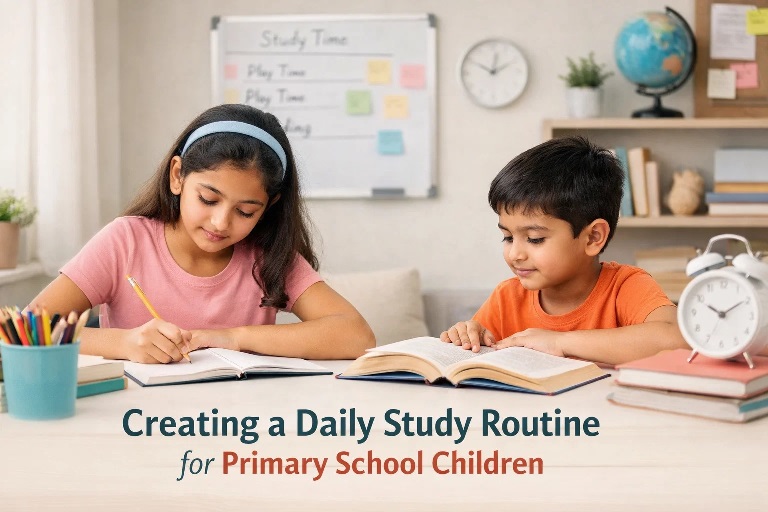
Creating a Daily Study Routine for Primary School Children

Helping children develop a daily study routine is one of the most effective ways to support their academic growth during the primary school years. For students from Class 1 to Class 6, a well-planned routine brings structure, reduces stress, and builds strong learning habits that last beyond school life.

Why a Daily Study Routine Is Important

Primary school children learn best when their day has a clear structure. A daily study routine helps children understand when it is time to study, play, and rest. It reduces last-minute stress before exams and encourages discipline from an early age. Most importantly, it allows children to study consistently instead of cramming at the last moment.

Understanding Your Child’s Natural Rhythm

Every child is different. Some children are more attentive in the morning, while others concentrate better in the evening. Observe when your child feels most energetic and alert. Schedule study time during these hours so learning feels easier and more effective. Avoid forcing long study sessions when the child is tired or distracted.

Setting a Fixed Study Time Every Day

Choose a fixed time slot for daily study and follow it regularly. This could be after school, in the evening, or early morning depending on your child’s routine. A fixed schedule helps children mentally prepare for study time and builds consistency. Even on weekends, keeping a light study routine helps maintain discipline.

Keeping Study Sessions Short and Focused

For primary students, long study hours are not necessary. Short and focused sessions work better. For younger children in Class 1 and Class 2, 20 to 30 minutes at a time is sufficient. For Classes 3 to 6, 40 to 60 minutes with small breaks works well. Breaks help children stay fresh and attentive.

Creating a Dedicated Study Space

A quiet and comfortable study area helps children focus better. Choose a place with good lighting, minimal noise, and limited distractions. Keep books, notebooks, and stationery within reach. Avoid study time on the bed or near television and mobile phones, as these reduce concentration.

Balancing Subjects Wisely

Do not overload a single day with too many subjects. Mix difficult and easy subjects to keep children motivated. For example, pair Maths with English or a lighter subject. Regular revision of previously taught topics is equally important to strengthen understanding.

Encouraging Independence and Responsibility

Gradually encourage children to take responsibility for their studies. Help them understand what needs to be completed each day, but allow them to try on their own. This builds confidence and self-discipline, which are essential skills for long-term academic success.

Including Time for Revision and Practice

Revision should be a part of the daily routine. Simple practices like revising lessons, solving small exercises, or reading aloud improve retention. Regular practice helps children feel confident and prepared for tests.

Staying Positive and Supportive

Appreciate effort, not just results. Encourage your child when they try their best, even if mistakes occur. A positive learning environment motivates children to stay consistent with their study routine.

A well-planned daily study routine makes learning easier, enjoyable, and more effective for primary school children. With patience, consistency, and support, parents can help their children build strong academic habits that lead to long-term success.

By Nidhi Mehta – India Tutor Online
Class 1 to 6 All Subjects
Call/Whatsapp: +91 9811521621

Benefits of One-to-One Online Tuition for Primary Classes

Primary school years play a very important role in a child’s academic journey. Classes 1 to 6 are the stage where children develop basic reading, writing, mathematical, and thinking skills. During these early years, the right guidance can make a big difference. One-to-one online tuition has emerged as a highly effective learning option for primary students, especially when parents want focused attention and steady improvement.

Individual Attention for Better Understanding

In one-to-one online tuition, the entire class is dedicated to a single student. This means the teacher focuses only on the child’s learning needs, strengths, and weaknesses. Unlike group classes, there is no competition for attention. Concepts are explained at a pace that suits the child, helping them understand lessons clearly instead of memorizing answers. This is especially useful for students who hesitate to ask questions in a group setting.

Personalized Learning Approach

Every child learns differently. Some children understand quickly, while others need more time and repetition. One-to-one online tuition allows lessons to be personalized based on the child’s learning style and school curriculum. The teacher can revise difficult topics, provide extra practice, and adjust teaching methods to ensure better results. This personalized approach helps children build a strong foundation in subjects like Maths, English, Science, and EVS.

Strong Focus on Basics and Concept Clarity

For primary classes, understanding basic concepts is more important than completing the syllabus quickly. One-to-one online tuition helps strengthen fundamentals by focusing on concept clarity. When a child understands the basics well, they perform better in higher classes. Regular revision and guided practice ensure that learning gaps are identified early and corrected in time.

Improved Confidence and Communication Skills

Many primary students lack confidence when they struggle academically. One-to-one online tuition creates a comfortable learning environment where children feel safe to ask questions and express doubts. Over time, this improves their confidence, communication skills, and interest in studies. Children become more independent and start participating actively in their learning process.

Flexible and Comfortable Learning Environment

Online tuition allows children to learn from the comfort of their home, reducing travel time and fatigue. This helps them stay relaxed and focused during classes. One-to-one online tuition also offers flexible scheduling, making it easier for parents to manage school, homework, and extracurricular activities without stress.

Better Monitoring of Progress

In one-to-one online tuition, the teacher can closely monitor the child’s academic progress. Regular feedback helps parents understand how their child is performing and where improvement is needed. This ongoing assessment ensures steady academic growth and timely support.

Ideal Support for Busy Parents and International Students

One-to-one online tuition is especially helpful for working parents and families living abroad. It ensures consistent academic support without compromising on quality. Children receive dedicated attention regardless of location or time zone.

Conclusion

One-to-one online tuition is a valuable learning solution for primary classes. It supports concept clarity, builds confidence, and provides personalized guidance that helps children grow academically. For Classes 1 to 6, this focused approach lays a strong foundation for future success.

By Nidhi Mehta – India Tutor Online

Class 1 to 6 All Subjects

Call/Whatsapp: +91 9811521621

Signs Your Child Needs Extra Academic Support in Primary Classes

Primary school years from Class 1 to Class 6 play a very important role in a child’s overall academic development. During this stage, children build the foundation for reading, writing, mathematics, and problem-solving. Sometimes, children may struggle silently, and parents may not immediately notice the signs. Identifying these early signs and providing timely academic support can make a big difference in a child’s confidence and performance.

Frequent Difficulty in Understanding Basic Concepts

If your child regularly finds it hard to understand basic concepts in subjects like Maths, English, or EVS, it may be a sign that they need extra academic support. Struggling with fundamentals such as simple calculations, sentence formation, or comprehension can affect learning in higher classes if not addressed early.

Lack of Interest in Studies or Homework

Children who feel overwhelmed by studies often start losing interest in schoolwork. If your child avoids homework, delays completing assignments, or shows frustration while studying, it may indicate that they are finding lessons difficult to follow. This lack of interest is often not due to laziness but a lack of clarity.

Declining Academic Performance

A gradual drop in test scores or inconsistent academic performance is another important sign. Even if a child was doing well earlier, changing academic demands in higher primary classes can make learning challenging. Extra academic support helps children cope with these changes more smoothly.

Difficulty in Concentration and Focus

Many primary school children struggle with focus, but if your child is unable to concentrate during studies for even short periods, it may affect learning. Difficulty in paying attention during online or classroom lessons can lead to gaps in understanding, which build up over time.

Trouble with Reading, Writing, or Speaking English

English language skills are crucial in primary education. If your child struggles with reading fluently, writing simple sentences, or expressing thoughts clearly, it may affect their performance in all subjects. Early language support can greatly improve overall academic confidence.

Anxiety or Low Confidence Related to Studies

Children who need extra help often feel anxious about exams, homework, or teacher feedback. They may compare themselves with peers or express fear of making mistakes. Low confidence is a strong indicator that a child needs patient guidance and encouragement.

Increased Dependence on Parents for Studies

If your child is unable to complete homework without constant help or reassurance, it may indicate difficulty in understanding lessons independently. Extra academic support helps children become more confident and self-reliant learners.

Teachers Expressing Concern

Feedback from school teachers should never be ignored. If teachers mention that your child needs more practice, attention, or support, it is a clear sign that additional academic guidance can be beneficial.

How Extra Academic Support Helps

Personalized academic support allows children to learn at their own pace. It helps clear doubts, strengthens basics, and builds study discipline. With the right guidance, children not only improve academically but also develop a positive attitude towards learning.

Providing timely academic support during primary classes ensures that small learning gaps do not turn into bigger challenges later.

By Nidhi Mehta
India Tutor Online Class 1 to 6 All Subjects
Call/Whatsapp: +91 9811521621

error: Content is protected !!