Managing Screen Time During Online Classes

Online classes have become an important part of education for primary school students. While online learning offers flexibility and access to quality teaching, many parents worry about the amount of screen time their child is exposed to. Managing screen time correctly is essential to protect a child’s health, focus, and overall development, especially for students from Class 1 to Class 6.

This article shares simple and practical ways to manage screen time during online classes without affecting learning quality.

Why Screen Time Management Is Important for Young Children

Children in primary classes are still developing physically and mentally. Excessive screen time can lead to eye strain, poor posture, reduced concentration, and tiredness. When screen time is planned and balanced properly, online classes can remain effective without harming a child’s well-being.

The goal is not to eliminate screen use but to use it wisely and purposefully.

Set a Fixed Routine for Online Classes

A clear daily routine helps children stay disciplined and focused. Online classes should be scheduled at fixed times, preferably when the child is fresh and attentive. Avoid keeping screens on outside of class time unless necessary for homework or revision.

When children know exactly when screen time starts and ends, they are less likely to overuse devices.

Encourage Breaks Between Online Sessions

Short breaks are extremely important for young learners. After every online class, children should step away from the screen for a few minutes. During breaks, encourage activities like stretching, walking, or simply resting their eyes.

These breaks help reduce eye strain and improve concentration during the next learning session.

Create a Proper Study Setup

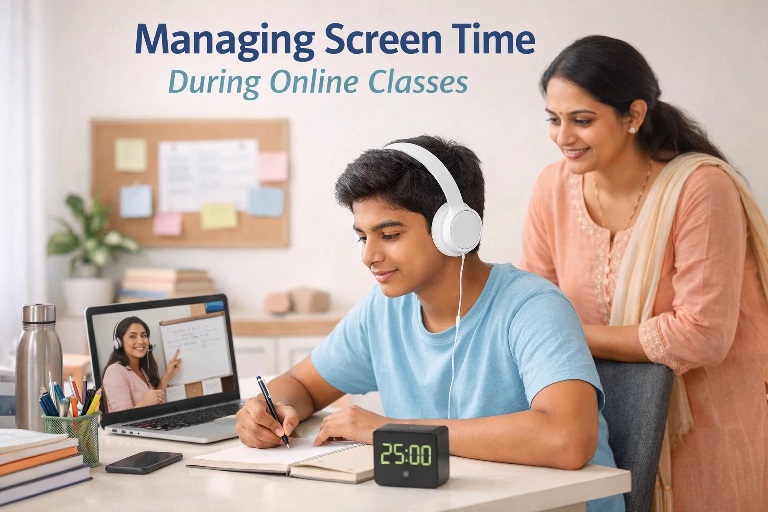
A good study environment makes a big difference. Ensure the child sits at a proper desk or table instead of using mobile phones or tablets in bed. The screen should be at eye level, and the room should be well-lit.

This not only reduces physical strain but also helps the child take online classes more seriously.

Balance Screen Time with Offline Learning

Online classes should always be supported with offline activities. Encourage children to practice writing in notebooks, read physical books, and revise lessons away from screens. This strengthens understanding and reduces total screen exposure.

Offline learning also improves memory and helps children stay engaged without depending fully on devices.

Monitor Non-Academic Screen Usage

Parents should keep an eye on how much time children spend on screens outside online classes. Games, videos, and mobile apps can quickly increase daily screen time. Setting clear rules for entertainment screen use helps maintain balance.

Children should understand that screens are mainly for learning during class hours.

Communicate with the Tutor When Needed

If a child feels tired or loses focus during online classes, parents should openly discuss it with the tutor. A good tutor can adjust teaching methods, pacing, or class timing to suit the child’s needs.

Healthy communication ensures that learning remains effective without unnecessary screen pressure.

Conclusion

Managing screen time during online classes is about balance, not restriction. With proper routines, regular breaks, offline practice, and parental involvement, online learning can be safe and highly effective for Class 1 to Class 6 students.

When screen time is used thoughtfully, children can benefit from online education while maintaining their physical and mental well-being.

By Nidhi Mehta
India Tutor Online Class 1 to 6 All Subjects
Call/Whatsapp: +91 9811521621

Online Tuition vs Home Tuition for Primary School Students

Choosing the right type of tuition for your child can be challenging, especially in the early school years. Parents often wonder whether online tuition or home tuition is more effective for students from Class 1 to Class 6. Both options have their benefits, but understanding their differences can help you make the best decision for your child’s academic growth.

Convenience and Flexibility

One of the biggest advantages of online tuition is convenience. Students can attend classes from the comfort of their home without the need to travel. This is especially helpful for parents with busy schedules or children studying in different cities or countries. Online tuition offers flexible timings, making it easier to fit classes into a child’s daily routine.

Home tuition, on the other hand, involves a tutor coming to your home. While this allows for personal interaction, it may require more planning and coordination for both parents and children. Travel time and scheduling can sometimes make it less flexible compared to online tuition.

Personalized Attention and Focus

Both online and home tuition provide one-to-one attention, which is crucial for primary school students. In online tuition, the tutor can focus entirely on the child, using interactive tools such as digital whiteboards, slides, and online exercises to make learning engaging. Many students enjoy the interactive nature of online classes, which can improve understanding and retention of concepts.

Home tuition also allows for focused learning, with the tutor present in the same room as the child. This can be beneficial for students who prefer face-to-face interaction and need guidance in a physical learning environment. However, the effectiveness depends on the tutor’s ability to maintain engagement during the session.

Safety and Health Considerations

Online tuition offers a safer alternative, especially for children attending international or distant schools. There is no need to travel, reducing exposure to traffic and other risks. During times when health and safety are a concern, such as seasonal illnesses or pandemics, online tuition ensures continuous learning without interruptions.

Home tuition involves physical interaction, which may not always be convenient for parents concerned about safety. While many parents trust home tutors, online tuition can provide peace of mind, especially for younger children.

Access to Qualified Tutors

With online tuition, children can access experienced and qualified tutors from anywhere in the world. This is particularly valuable if your child is following an international curriculum or needs a tutor with specific expertise. Online platforms make it easier to find tutors like Nidhi Mehta, who have experience teaching students from different countries and school systems.

Home tuition may have a more limited selection depending on your location. Finding a highly qualified tutor locally can sometimes be challenging, and the choices may be restricted to those available within your area.

Conclusion

Both online tuition and home tuition have their own advantages for primary school students. Online tuition provides flexibility, safety, and access to a wider range of qualified tutors, while home tuition offers in-person interaction and immediate guidance. For parents seeking a reliable and experienced tutor who can teach all subjects for Class 1 to Class 6 with personalized attention, online tuition often proves to be a convenient and effective solution.

By Nidhi Mehta – India Tutor Online

Class 1 to 6 All Subjects

Call/Whatsapp: +91 9811521621

error: Content is protected !!