

Are We Expecting Too Much From Our Children

Are We Expecting Too Much From Our Children

In today’s competitive world, many parents wonder whether they are asking too much from their children. From academics to extracurricular activities, children are often expected to excel in every area. While encouraging children to do well is important, excessive pressure can sometimes harm their confidence, motivation, and overall well-being.

Academic Pressure and Young Learners

Academic performance is often the first area where parents set high expectations. Children from Class 1 to Class 6 are in their foundational years, learning essential concepts in subjects like mathematics, science, and language. Piling on too much pressure at this stage can lead to stress, anxiety, and even a dislike for learning.

Many Indian schools focus heavily on exam results and scoring high marks. While this approach can develop discipline, it may also reduce a child’s natural curiosity and creativity. Encouraging learning through understanding rather than rote memorization helps children build a stronger academic foundation.

Comparing Curriculums: CBSE, ICSE, State Boards, and IB

Different school boards have varying levels of academic demands. For example:

  • CBSE emphasizes structured learning and regular testing. Students are expected to maintain consistency but the syllabus is relatively manageable for primary classes.

  • ICSE often has a more detailed curriculum with higher expectations in language and literature.

  • State Boards may have less intensive syllabi but still expect regular performance in exams.

  • International Baccalaureate (IB) focuses on inquiry-based learning, critical thinking, and holistic development. While IB encourages creativity and self-directed learning, children may still feel pressure due to projects, assessments, and extended tasks.

Understanding the specific demands of a child’s curriculum is important. Parents can adjust expectations based on the learning style and pace of their child, rather than comparing them to others in different boards or schools.

The Balance Between Encouragement and Pressure

It is natural for parents to want the best for their children. However, excessive expectations can backfire. Some signs that children may be under too much pressure include reluctance to study, frequent stress or anxiety, low self-confidence, and negative feelings about school.

Encouragement should focus on effort rather than results. Praising a child for trying, exploring, and improving gradually can motivate them to enjoy learning. Allowing children to make mistakes, explore their interests, and learn at their own pace creates a supportive environment where they can thrive.

Importance of Holistic Development

Children are more than just their academic achievements. Participation in sports, arts, hobbies, and social activities is equally important for building confidence, teamwork, and problem-solving skills. A balanced routine with time for rest, play, and learning helps children stay motivated and reduces burnout.

For parents, understanding that each child has unique strengths and challenges is key. Setting realistic goals and giving children room to grow helps develop not just academic skills but emotional resilience as well.

Supporting Your Child Effectively

As an experienced tutor teaching students from Class 1 to Class 6, I often see children struggling because of high expectations. Online tuition can provide the support children need without adding extra stress. Individualized guidance helps children strengthen concepts, gain confidence, and improve academic performance in a structured yet calm environment.

Parents can support their children by maintaining open communication, providing encouragement, and celebrating progress, no matter how small. This approach fosters a love for learning and helps children achieve success in a healthy and sustainable way.

Conclusion

Expecting your child to do well is natural, but excessive pressure can harm their overall development. Understanding the curriculum demands, supporting holistic growth, and focusing on effort rather than just results can create a positive learning environment. By balancing expectations with care and guidance, parents can help their children thrive academically and emotionally.

By Nidhi Mehta – India Tutor Online

Class 1 to 6 All Subjects

Call/Whatsapp: +91 9811521621
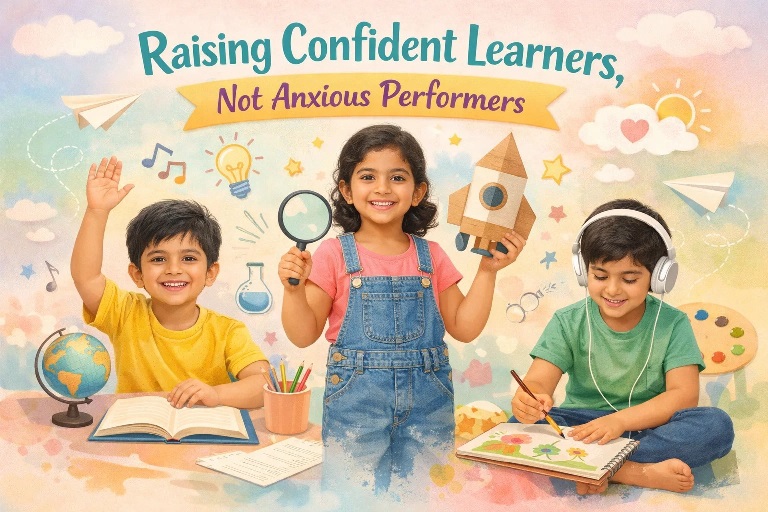
Raising Confident Learners, Not Anxious Performers

Raising Confident Learners, Not Anxious Performers

In today’s competitive academic environment, parents often focus heavily on grades and performance. While academic success is important, an excessive emphasis on marks can sometimes turn children into anxious performers rather than confident learners. Building confidence in primary school students is crucial, as it lays the foundation for lifelong learning and personal growth. In this article, we will explore how parents and educators can nurture confident learners, while also considering the approaches of different school curriculums, including CBSE, ICSE, and the International Baccalaureate (IB).

Understanding the Difference: Learners vs Performers

A confident learner is a child who enjoys the process of learning, asks questions freely, and is willing to make mistakes to understand concepts better. They are curious, resilient, and capable of thinking independently. On the other hand, an anxious performer is often motivated primarily by fear of failure or the pressure to achieve high grades. Such children may memorize information without understanding it, avoid challenges, and struggle with self-esteem when results do not meet expectations.

As parents, it is important to recognize these differences early and adjust guidance accordingly. Encouraging exploration, praising effort instead of just outcomes, and allowing children to fail and try again are key strategies for nurturing confidence.

Encouraging Concept-Based Learning

One of the most effective ways to raise confident learners is to focus on concept-based learning rather than rote memorization. Children should be guided to understand the “why” behind each concept. This approach not only helps in retaining knowledge for a longer time but also enables students to apply concepts in new situations, fostering creativity and problem-solving skills.

For example, in mathematics, instead of teaching formulas by rote, a tutor can demonstrate how the formula works through real-life examples. Similarly, in science, experiments and observations help children understand principles in a practical and engaging manner. When students comprehend concepts fully, they feel more confident in their abilities.

Balancing Curriculum Demands and Individual Learning

Different curriculums have different focuses. CBSE (Central Board of Secondary Education) emphasizes a balance between theory and application, ICSE (Indian Certificate of Secondary Education) focuses on detailed study and strong language skills, while IB (International Baccalaureate) encourages inquiry-based learning, critical thinking, and global awareness.

While CBSE and ICSE students may sometimes experience pressure due to exams and grades, IB students often face challenges in managing multiple projects and assignments. Regardless of the curriculum, the goal should always be to promote understanding over mere performance. Parents and tutors can help by creating a supportive environment where questions are welcomed, and learning is viewed as an enjoyable journey.

Role of Online Tuition in Building Confidence

Personalized online tuition can play a significant role in transforming anxious performers into confident learners. One-to-one sessions allow tutors to focus on the individual needs of a child, identify areas of difficulty, and adapt teaching methods accordingly. Children receive immediate feedback, guidance, and encouragement, which helps reduce anxiety and improve self-confidence.

A tutor experienced in multiple curriculums, including international boards, can guide students through challenging topics while maintaining a positive and motivating approach. Online classes also offer the flexibility to learn at a comfortable pace, making children feel secure and supported.

Practical Tips for Parents

Parents can complement academic support by encouraging a growth mindset at home. Praise efforts, curiosity, and problem-solving rather than just marks. Avoid comparing children with peers and celebrate small achievements. Provide opportunities for children to explore hobbies and creative activities outside academics. This holistic approach reduces anxiety and helps children develop confidence in multiple areas of life.

Conclusion

Raising confident learners requires a shift from a purely results-oriented approach to one that values understanding, curiosity, and personal growth. By focusing on concept clarity, encouraging questions, balancing curriculum demands, and providing personalized support through online tuition, parents can help their children become resilient, motivated, and confident learners.

By Nidhi Mehta – India Tutor Online

Class 1 to 6 All Subjects

Call/Whatsapp: +91 9811521621

Creating a Positive Learning Mindset at Home

Creating a Positive Learning Mindset at Home

A child’s attitude toward learning has a direct impact on their academic success. Cultivating a positive learning mindset at home helps children approach studies with confidence, curiosity, and resilience. As a parent, creating the right environment and encouraging constructive habits can make a significant difference, whether your child is following the CBSE, ICSE, or International Baccalaureate (IB) curriculum.

Understanding a Positive Learning Mindset

A positive learning mindset means believing that abilities and intelligence can grow with effort and practice. Children with this mindset are more likely to:

    • Embrace challenges instead of avoiding them
    • Persist through difficulties
    • Learn from mistakes without feeling discouraged
    • Show curiosity and enthusiasm toward new topics

Parents play a crucial role in shaping this mindset. Simple changes in daily routines, encouragement, and supportive interactions can help children build confidence and develop a love for learning.

Setting Up a Supportive Learning Environment

Creating a dedicated, distraction-free space for study at home is the first step. This space should have good lighting, comfortable seating, and all necessary study materials like books, notebooks, and stationery. A consistent study area signals to the child that learning is valued and important.

Maintaining a routine is equally important. Structured schedules that balance study, play, and rest help children manage their time effectively. Parents should encourage breaks during study sessions to prevent fatigue and keep the mind fresh.

Encouraging Effort and Not Just Results

Praising effort rather than just grades nurtures resilience and a growth mindset. For instance, acknowledging the hard work a child puts into solving a difficult math problem is more effective than only celebrating the correct answer. Children learn that effort is valuable and that mistakes are part of the learning process.

Incorporating International and Indian Curriculum Practices

Children studying under CBSE or ICSE benefit from structured lesson plans and regular assessments. Encouraging them to set small goals, review their work, and practice consistently aligns well with these curriculums.

For students following the IB curriculum, fostering inquiry, critical thinking, and reflection is essential. Parents can support IB learners by encouraging questions, exploring subjects beyond textbooks, and helping children connect learning to real-life experiences.

Integrating strategies from different boards at home can give children a broader perspective and help them develop a versatile learning approach.

Building Motivation and Curiosity

Parents can inspire motivation by showing interest in their child’s studies. Discussing topics learned in school, exploring educational videos together, or engaging in small projects can make learning enjoyable. Encouraging curiosity helps children take ownership of their education and develop lifelong learning habits.

Limiting negative comparisons with peers and focusing on personal progress helps maintain a positive outlook. Children should feel proud of their achievements and encouraged to improve steadily rather than compete excessively.

Leading by Example

Children learn by observing. Parents who demonstrate curiosity, problem-solving, and a positive attitude toward challenges naturally influence their children to adopt similar behaviors. Reading books, exploring hobbies, and sharing learning experiences create a home culture that values education.

Conclusion

Creating a positive learning mindset at home requires patience, consistency, and encouragement. By offering a supportive environment, praising effort, integrating curriculum-specific strategies, and fostering curiosity, parents can help children become confident, motivated, and independent learners. Whether your child is following CBSE, ICSE, or IB, these practices form a strong foundation for academic and personal growth.

By Nidhi Mehta – India Tutor Online

Class 1 to 6 All Subjects

Call/Whatsapp: +91 9811521621

How Academic Pressure Affects Learning in Primary Classes

How Academic Pressure Affects Learning in Primary Classes

Academic pressure is becoming a common concern for young students, especially in primary classes from Class 1 to Class 6. While it is important to encourage children to study and perform well, excessive pressure can have the opposite effect, impacting their learning, confidence, and overall well-being. Understanding the balance between guidance and stress is crucial for parents, teachers, and tutors alike.

Understanding Academic Pressure in Primary Classes

Academic pressure refers to the stress students feel to meet expectations set by parents, teachers, or even themselves. In primary classes, children are still developing foundational skills in reading, writing, mathematics, and problem-solving. Too much pressure at this stage can lead to anxiety, fear of failure, and a lack of motivation. This may result in students avoiding challenges, losing interest in studies, or even experiencing behavioral issues.

How Academic Pressure Affects Learning

Excessive academic pressure affects students in several ways:

  • Reduced Retention and Understanding: Children under stress may memorize information just to pass tests but fail to understand the concepts deeply, which affects long-term learning.

  • Lower Confidence: Constant comparison with peers or high expectations can make children doubt their abilities, reducing self-confidence.

  • Decreased Creativity: Academic pressure often emphasizes rote learning, leaving little room for creativity, exploration, or curiosity.

  • Mental and Emotional Health: Stress and anxiety at a young age can lead to sleeplessness, irritability, and lack of focus, further hindering academic progress.

Differences in Curriculum Pressure

The level of academic pressure varies depending on the curriculum a child follows. For instance:

  • CBSE and ICSE: These Indian boards often have structured syllabi with frequent tests and exams. Students may feel pressure to score high marks and maintain consistent performance throughout the year.

  • State Boards: Some state boards have a lighter syllabus compared to CBSE or ICSE, but pressure can still exist depending on parental expectations and competitive environments.

  • International Boards (IB, IGCSE, Cambridge): The International Baccalaureate (IB) and similar boards focus on holistic development, emphasizing inquiry-based learning, creativity, and conceptual understanding rather than only grades. While IB reduces rote learning pressure, children may face stress due to project deadlines, presentations, and research-based assignments.

Understanding these differences helps parents provide the right kind of support according to their child’s curriculum and individual learning style.

How Parents and Tutors Can Reduce Pressure

Reducing academic pressure doesn’t mean lowering expectations. It means providing guidance, support, and encouragement while creating a positive learning environment. Here are some strategies:

  • Set Realistic Goals: Focus on progress and understanding rather than only grades.

  • Encourage Curiosity: Allow children to ask questions and explore topics beyond textbooks.

  • Balanced Routine: Combine study with recreation, hobbies, and family time to reduce stress.

  • Personalized Attention: One-to-one tuition can help identify areas where a child is struggling and provide targeted support, reducing frustration and stress.

  • Celebrate Effort, Not Just Results: Recognizing hard work builds confidence and motivates students to keep learning.

The Role of Online Tuition in Managing Academic Pressure

Online tuition can play a key role in easing academic pressure for primary students. With personalized sessions, tutors can focus on individual learning needs, pace lessons according to the child’s understanding, and provide a supportive environment that encourages questions and mistakes. For children studying under Indian or international curriculums, this approach helps maintain balance and promotes a deeper understanding of concepts without excessive stress.

Conclusion

Academic pressure is a challenge that every primary student faces to some degree. While guidance and support are essential, too much pressure can negatively impact learning, confidence, and emotional well-being. Parents and tutors must create a positive, supportive learning environment, choose appropriate study methods, and provide personalized attention to ensure children enjoy learning and build a strong foundation for future success. Balancing curriculum expectations with the child’s individual pace is the key to fostering both academic and personal growth.

By Nidhi Mehta – India Tutor Online Class 1 to 6 All Subjects – Call/Whatsapp: +91 9811521621

error: Content is protected !!