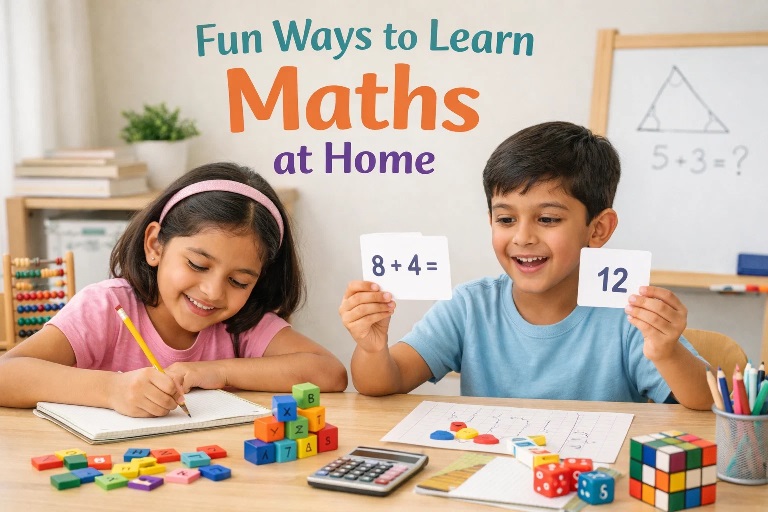
Fun Ways to Learn Maths at Home

Learning maths does not have to be stressful or boring, especially for young children. When maths is taught in a fun and practical way, students understand concepts faster and feel more confident. For students from Class 1 to Class 6, learning maths at home can be both enjoyable and effective if the right methods are used. Parents can play an important role by turning everyday activities into learning opportunities.

Use Everyday Objects for Maths Practice

One of the simplest ways to teach maths at home is by using everyday household items. Counting fruits, vegetables, toys, or coins helps younger children understand numbers and basic operations. For older students, parents can use these items to explain addition, subtraction, multiplication, and division. This hands-on approach makes maths more real and easier to understand.

Turn Maths into Games

Games are a powerful way to make learning enjoyable. Simple board games, dice games, and card games can help children improve counting, number recognition, and mental maths skills. For example, rolling dice and adding numbers or playing simple calculation games can strengthen basic maths concepts without pressure. When learning feels like play, children are more willing to participate.

Involve Maths in Daily Activities

Daily routines offer many chances to practice maths. Cooking can be used to teach measurements and fractions. Shopping can help children understand money, addition, subtraction, and comparison of prices. Time management activities such as reading the clock or planning a daily schedule can improve understanding of time and numbers. These activities help children see how maths is used in real life.

Encourage Mental Maths Practice

Mental maths helps students develop speed and accuracy. Parents can ask quick questions during free time, such as simple additions, subtractions, or multiplication problems. Short and regular mental maths practice builds confidence and improves problem-solving skills, especially for students in higher primary classes.

Use Visual Learning Methods

Many children learn better through visuals. Using number charts, flashcards, and diagrams can make complex concepts easier to understand. Drawing shapes, patterns, and number lines helps children grasp ideas like geometry, sequences, and place value. Visual learning supports long-term understanding and memory.

Break Learning into Small Steps

Maths can feel overwhelming if too much is taught at once. Breaking lessons into small, manageable steps helps children learn comfortably. Each concept should be clearly understood before moving to the next. Regular revision also plays an important role in strengthening maths skills.

Create a Positive Learning Environment

A calm and encouraging learning environment helps children perform better. Mistakes should be treated as learning opportunities rather than failures. Praising effort and progress builds confidence and reduces fear of maths. When children feel supported, they are more open to learning.

Conclusion

Learning maths at home can be fun, engaging, and effective when taught using practical and creative methods. By using everyday activities, games, visuals, and positive encouragement, parents can help their children build strong maths foundations. Early support and the right guidance can make a lasting difference in a child’s academic journey.

By Nidhi Mehta – India Tutor Online
Class 1 to 6 All Subjects
Call/Whatsapp: +91 9811521621
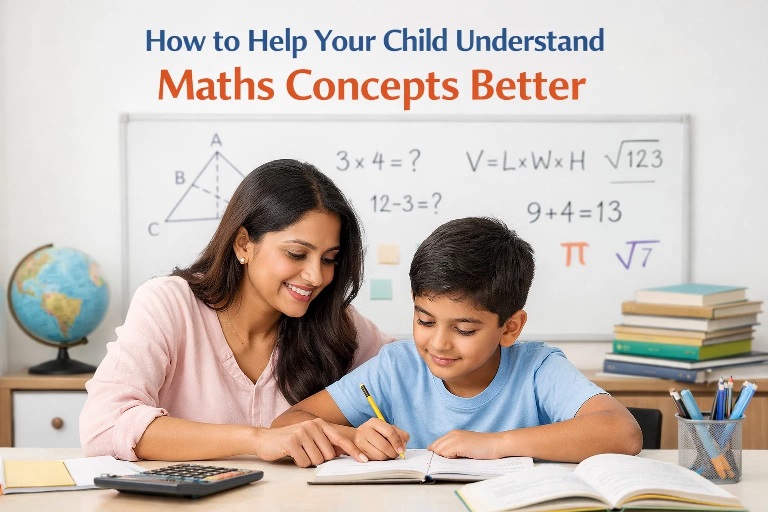
How to Help Your Child Understand Maths Concepts Better

Mathematics is a subject that often challenges young learners. For students from Class 1 to Class 6, building a strong foundation in maths is essential for their confidence and academic success. As a parent, you play an important role in helping your child develop a clear understanding of maths concepts. Here are some practical strategies that can make learning maths easier and more enjoyable for your child.

Start with Concept Clarity

Before solving problems, your child needs to understand the basic concepts. For example, if they are learning addition or subtraction, make sure they know what these operations mean in real life. Use simple examples like sharing apples or counting toys to explain how numbers work. When children understand the concept behind a problem, they can solve it with confidence.

Use Visual Aids and Real-Life Examples

Many children grasp maths better when they can see it visually. Use objects like coins, blocks, or beads to demonstrate addition, subtraction, multiplication, or division. Visual aids make abstract concepts more concrete. You can also relate maths to everyday situations, such as calculating the total cost of items while shopping or measuring ingredients while cooking. This approach helps children see the practical use of maths.

Break Problems into Smaller Steps

Complex problems can overwhelm young learners. Teach your child to break a problem into smaller, manageable steps. For example, while solving a word problem, they can first identify what is given, then what is required, and finally, solve it step by step. Breaking problems into smaller parts makes maths less intimidating and encourages logical thinking.

Encourage Practice with a Purpose

Practice is important, but it should be meaningful. Encourage your child to solve a variety of problems to strengthen their understanding. Regular practice helps them recognize patterns, improve speed, and develop accuracy. Focus on quality rather than quantity and provide guidance whenever they face difficulties. Praise their efforts to boost motivation and confidence.

Make Learning Interactive and Fun

Maths does not have to be boring. Incorporate games, quizzes, and puzzles into learning. Simple activities like number games, flashcards, or online maths apps can make learning engaging. When children enjoy the process, they are more likely to remember concepts and develop a positive attitude toward the subject.

Provide Timely Support and Encouragement

Children sometimes hesitate to ask questions when they feel stuck. Encourage them to ask doubts and provide clear explanations. Be patient and positive, reinforcing the idea that making mistakes is a natural part of learning. Regular encouragement builds confidence and reduces maths anxiety.

Seek Professional Guidance if Needed

If your child struggles with certain concepts despite practice and support, consider enrolling them in online tuition classes. A qualified tutor can provide personalized guidance, identify gaps in understanding, and offer structured lessons tailored to the child’s needs. Individual attention can significantly improve their learning outcomes.

By following these strategies, you can help your child develop a solid understanding of maths concepts and foster a lifelong interest in learning. Strong foundational skills in mathematics not only improve academic performance but also build problem-solving and logical thinking abilities that benefit children in all areas of life.

By Nidhi Mehta – India Tutor Online

Class 1 to 6 All Subjects

Call/Whatsapp: +91 9811521621

error: Content is protected !!