
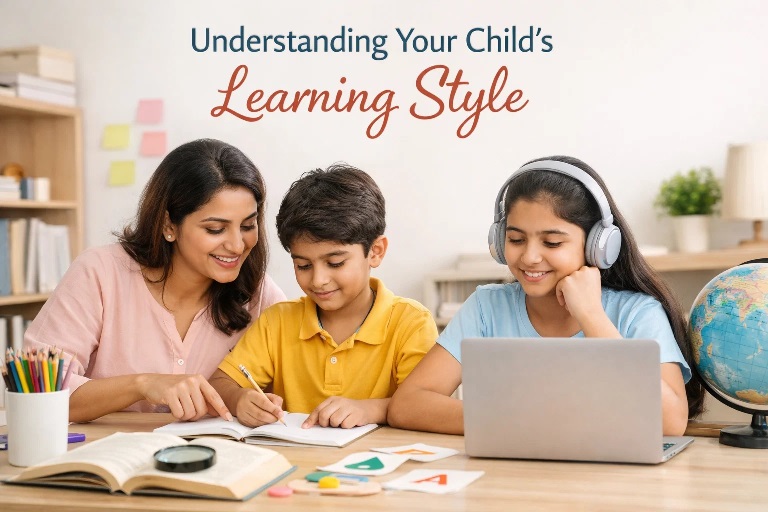
Every child learns differently, especially in the early school years from Class 1 to Class 6. Some children understand lessons quickly by listening, while others learn better by seeing examples or doing activities. Understanding your child’s learning style helps parents and teachers support learning in a way that feels natural and effective for the child. When lessons match a child’s learning style, studying becomes easier, more enjoyable, and less stressful.
Common Learning Styles in Primary School Children
Most children show a mix of learning styles, but one style is usually stronger than the others. Recognizing this can make a big difference in how well your child understands school subjects.
Visual Learners
Visual learners understand better when they see information. They prefer pictures, diagrams, charts, and written notes. These children often remember what they read or see on the board and may enjoy drawing or using colours while studying. Visual learning works well for subjects like Mathematics, EVS, and Science when concepts are shown through examples and visuals.
Auditory Learners
Auditory learners learn best by listening. They understand lessons through explanations, discussions, and verbal instructions. These children may remember what the teacher says more clearly than what is written. Reading aloud, explaining answers verbally, and interactive discussions help auditory learners perform better in school.
Kinesthetic Learners
Kinesthetic learners learn by doing. They prefer hands-on activities, movement, and practical examples. Sitting still for long periods can be challenging for them. Activities like using objects for counting, acting out lessons, or short study breaks help these learners stay focused and engaged.
How to Identify Your Child’s Learning Style
Parents can observe simple signs at home to understand their child’s learning style. Notice how your child prefers to study. Do they like reading books or watching videos? Do they ask to hear explanations again? Do they learn better while writing, drawing, or moving around? Paying attention to these habits can give clear clues.
It is also important to remember that learning styles can change as children grow. A child may use more than one learning style depending on the subject or situation.
Supporting Your Child’s Learning Style at Home
Once you understand your child’s learning style, you can make small changes at home to support learning. For visual learners, use charts, flashcards, and written schedules. For auditory learners, discuss lessons, ask them to explain topics aloud, and use storytelling. For kinesthetic learners, include activities, real-life examples, and short breaks during study time.
The goal is not to label the child but to create a comfortable learning environment that helps them understand concepts better.
Role of Personalized Teaching in Learning Styles
In primary classes, personalized teaching plays an important role in supporting different learning styles. One-to-one attention allows lessons to be adjusted according to how a child learns best. This builds confidence, improves understanding, and encourages active participation.
Helping Your Child Learn with Confidence
Understanding your child’s learning style helps reduce frustration and builds a positive attitude toward studies. When children feel supported, they develop better study habits and stronger academic foundations, which are essential for long-term success.
By Nidhi Mehta – India Tutor Online
Class 1 to 6 – All Subjects
Call/Whatsapp: +91 9811521621