
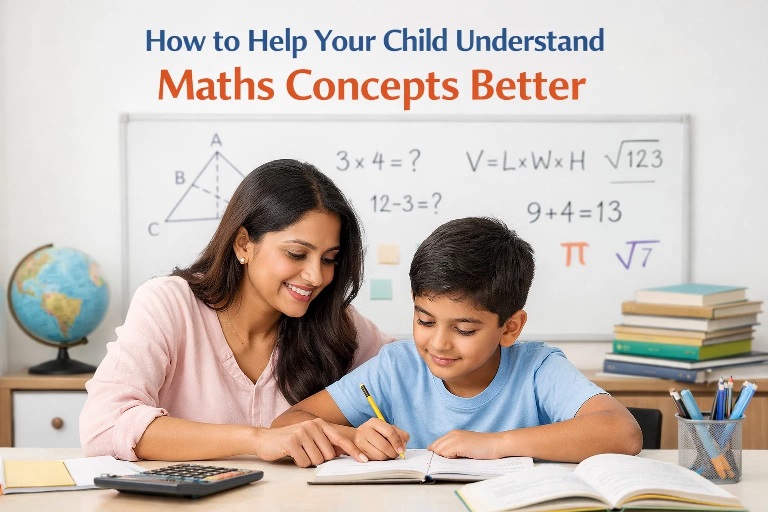
Mathematics is a subject that often challenges young learners. For students from Class 1 to Class 6, building a strong foundation in maths is essential for their confidence and academic success. As a parent, you play an important role in helping your child develop a clear understanding of maths concepts. Here are some practical strategies that can make learning maths easier and more enjoyable for your child.
Start with Concept Clarity
Before solving problems, your child needs to understand the basic concepts. For example, if they are learning addition or subtraction, make sure they know what these operations mean in real life. Use simple examples like sharing apples or counting toys to explain how numbers work. When children understand the concept behind a problem, they can solve it with confidence.
Use Visual Aids and Real-Life Examples
Many children grasp maths better when they can see it visually. Use objects like coins, blocks, or beads to demonstrate addition, subtraction, multiplication, or division. Visual aids make abstract concepts more concrete. You can also relate maths to everyday situations, such as calculating the total cost of items while shopping or measuring ingredients while cooking. This approach helps children see the practical use of maths.
Break Problems into Smaller Steps
Complex problems can overwhelm young learners. Teach your child to break a problem into smaller, manageable steps. For example, while solving a word problem, they can first identify what is given, then what is required, and finally, solve it step by step. Breaking problems into smaller parts makes maths less intimidating and encourages logical thinking.
Encourage Practice with a Purpose
Practice is important, but it should be meaningful. Encourage your child to solve a variety of problems to strengthen their understanding. Regular practice helps them recognize patterns, improve speed, and develop accuracy. Focus on quality rather than quantity and provide guidance whenever they face difficulties. Praise their efforts to boost motivation and confidence.
Make Learning Interactive and Fun
Maths does not have to be boring. Incorporate games, quizzes, and puzzles into learning. Simple activities like number games, flashcards, or online maths apps can make learning engaging. When children enjoy the process, they are more likely to remember concepts and develop a positive attitude toward the subject.
Provide Timely Support and Encouragement
Children sometimes hesitate to ask questions when they feel stuck. Encourage them to ask doubts and provide clear explanations. Be patient and positive, reinforcing the idea that making mistakes is a natural part of learning. Regular encouragement builds confidence and reduces maths anxiety.
Seek Professional Guidance if Needed
If your child struggles with certain concepts despite practice and support, consider enrolling them in online tuition classes. A qualified tutor can provide personalized guidance, identify gaps in understanding, and offer structured lessons tailored to the child’s needs. Individual attention can significantly improve their learning outcomes.
By following these strategies, you can help your child develop a solid understanding of maths concepts and foster a lifelong interest in learning. Strong foundational skills in mathematics not only improve academic performance but also build problem-solving and logical thinking abilities that benefit children in all areas of life.
By Nidhi Mehta – India Tutor Online
Class 1 to 6 All Subjects
Call/Whatsapp: +91 9811521621